Showing posts with label Provence Tours. Show all posts

Tuesday, 22 April 2014

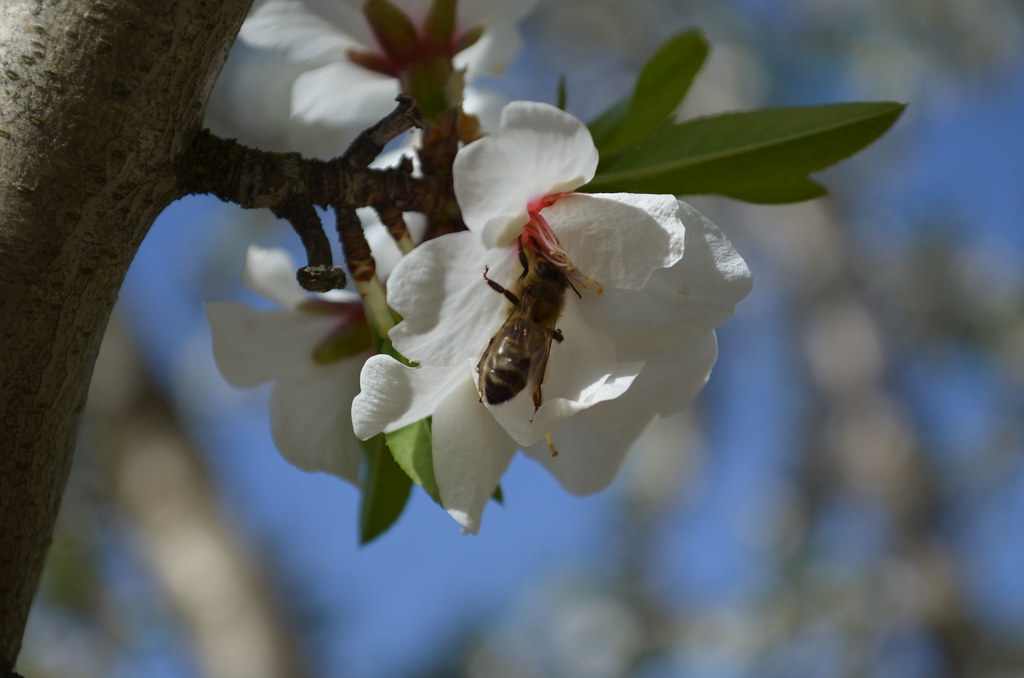
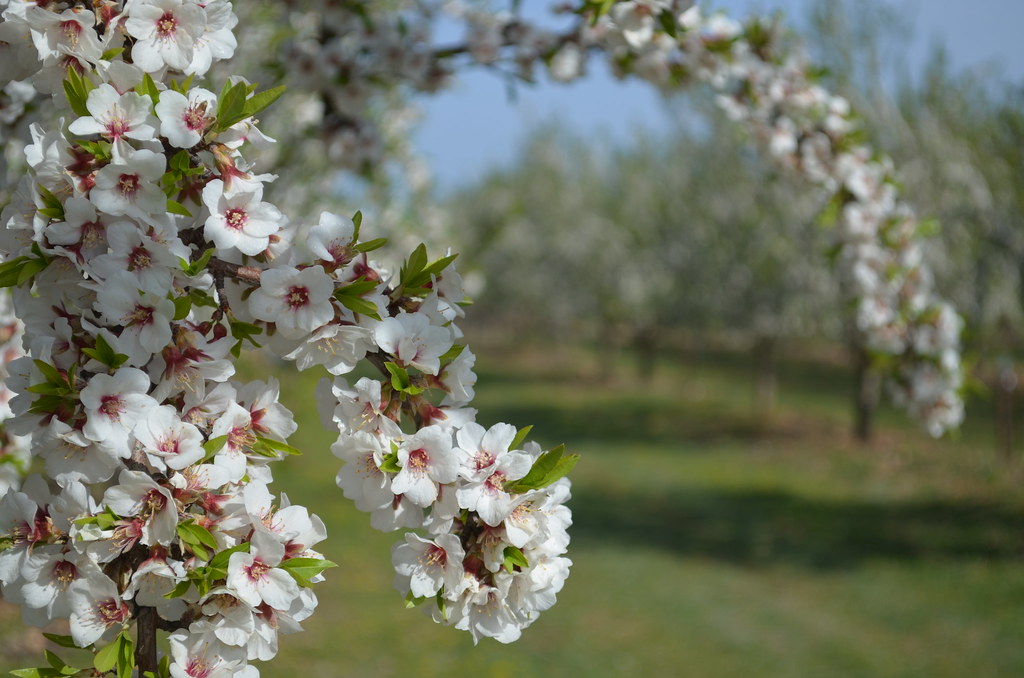
Almond Blossom in Provence

By the time this post appears on my blog the remarkable event it recounts will be over!

Once upon a time the areas of Provence that are now famous for their lavender fields, where then famous for their almonds.
Indeed the main crops on the Valensole plateau were almonds and wheat, and the wheat was usually used for animal feed. Growing almonds was a hard job however and climatic conditions and competition from abroad just to name those, soon put a stop to the almond trees and let the lavender take its place.

If you take a trip to the Valensole plateau nowadays you will find that most of the lone trees growing amongst the lavender and wheat fields are wild almond trees, witnesses to the past when they were the kings of the land!
Wild almonds in Haute Provence

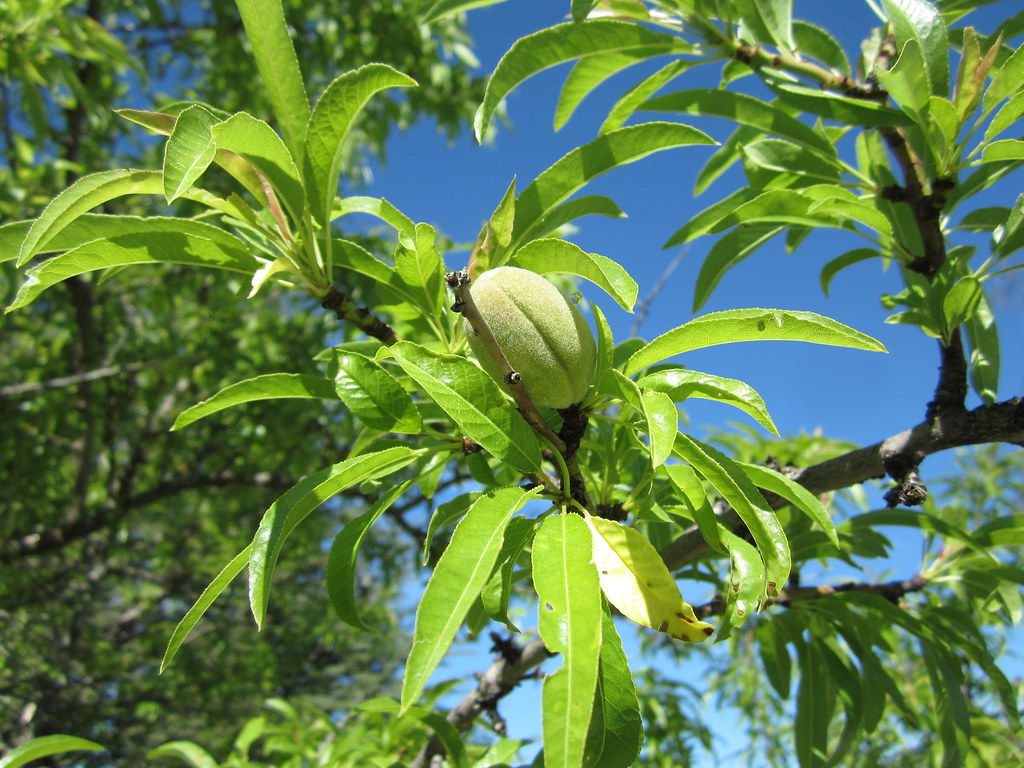
But times have changed and the almond trees are back. The harvest nowadays is used for essential almond oil and also for human consumption as the almonds are quite delicious, and when incorporated with local lavender honey the resulting nougat is something you won't forget in a hurry!
The essential oil is used in skin creams and one of the biggest clients is L'Occitane en Provence whose custom ensures the survival of the local harvest.

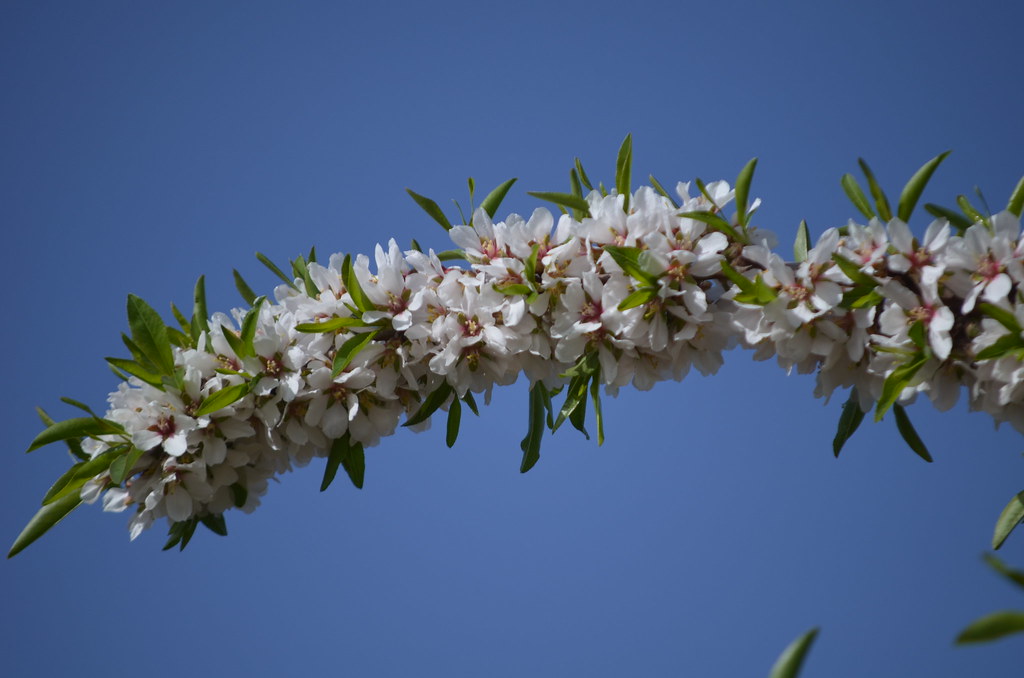
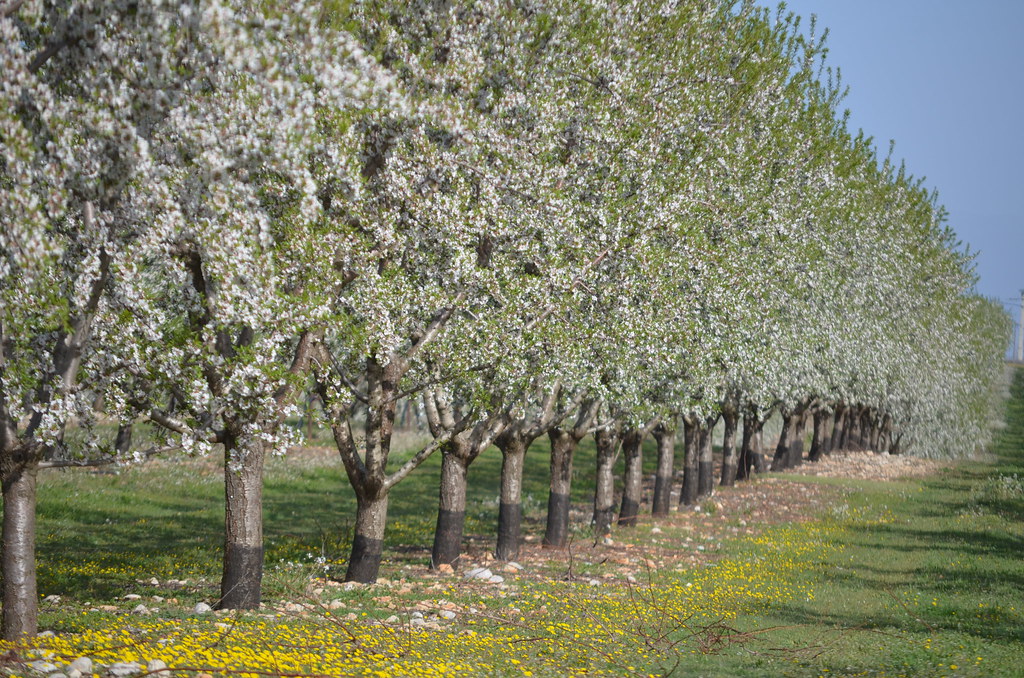
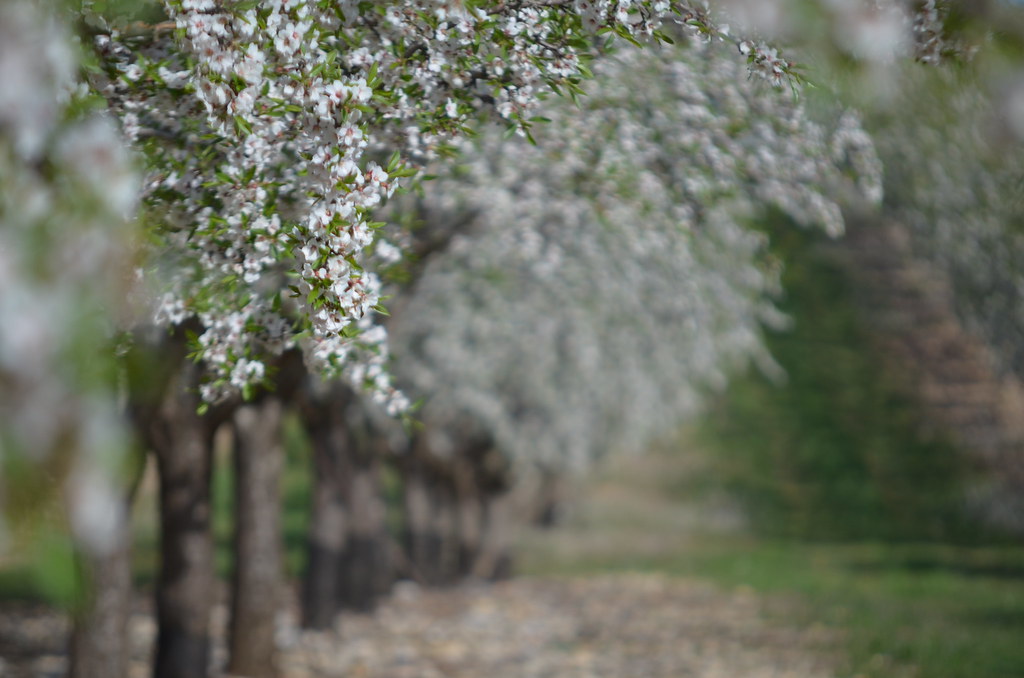
Below are a series of photos that can be found on our Flickr page of this years almond blossom. What is quite amazing is the scent given off by the flowers which smells of honey straight from the jar!


Friday, 7 February 2014

Lavender Endowment Fund Website

The Lavender Endowment Fund website is up and running in English. The translation was done by me and so if you spot any glaring errors don't hesitate to post a message.
The website can be viewed here : http://www.sauvegarde-lavandes-provence.org/en/
Healthy Lavender and photo bombing bee taken near Sault last summer

The Decline of Lavender page was taken directly from my blog post article Provence Lavender Under Threat as the members of the board decided it explained the issue clearly.

Please spread the word as Provence lavender needs help, the situation is not disastrous but it is not good either, and money is needed for research.

For every lavender day tour offered by Unique Provence we will donate 50€ to the fund and every small group tour, 100€ per person, but you can donate by using the paypal link on the endowment fund website.

Monday, 9 December 2013

A Truffle Hunt in Provence

If you had planned your trip to Provence in the depth of Winter to visit monuments and enjoy wine tastings you may well go home a little disappointed.
The trees have lost their leaves, many hotels have shut for the season, the main tourist attractions have little to offer in the way of souvenirs... It's all a bit quiet and even a bit sad...

...or at least that is how it may seem. In fact there are some unique activities that can only take place during the Winter and the highlight of them all is the Truffle Hunt!
A truffle wood in winter
Of course truffles can be found throughout the year but the finest, most pungent member of this underground fungus makes its appearance from the month of December through to March, I am of course talking about Tuber Melanosporum or the Winter Truffle or as it is referred to in France "Le Diamant Noir", The Black Diamond.

A Short History of Truffles

References to Truffles can be found as far back as ancient  Egypt, where we know that Cheops served truffles to visiting delegations. The Greek Theophrastus (327-287 BC) thought that truffles were created by Autumn rains and thunder but it took several hundred years for his countryman Plutarch (46-120AD) to realise that it was water, earth and lightening that made truffles... Since then no new theories are mentioned so I'll stick with that one.
Truffles where a common foodstuff in pre-middle age times they were plentiful and all you needed was a pig (a sow) to find them and nearby woodland, but with the increased power of the Catholic church the eating of truffles was soon stopped as the eating of a black object found underground and requiring a cloven hoofed animal to find it could only be the work of the devil.
Luckily such superstitions where less adhered to in the Renaissance period by the likes of François I during whose reign the Truffle was returned to its rightful place on the table. At the time the Truffles on the royal tables originated from  Burgundy, then from the South West of France and notably from the Perigord which gave them one of their names "La Truffe du Périgord".

At the time truffles were still hunted for by Sows who apparently found the odour of the truffle similar to that of the sexual organs of a male pig. The fact that they have to be reigned in to stop them eating the truffle is either the indication of an extraordinarily amorous sentiment or that of pure hatred for their male counterparts. Whatever the case, with this new information in mind,  next time you enjoy a Truffle Brouillade you can shine in society by announcing with authority the similarity to the senses of the truffle and a boars nether regions.

The Birth of Truffle Cultivation

Modern day truffles are "grown", sort of. In 1810, a man called Joseph Talon from the village of Saint-Saturnin les Apt in the heart of the Luberon region of Provence discovered the connection with the truffle and the trees that they grew near, and it was this discovery that led to the development of modern day truffle farming. The technique consists of rubbing mashed up truffles into the roots of small oak trees an then planting them, actually it's a bit more complicated than that but that's the general idea.
Truffle production in France in 1880 was 1320 tonnes, with 60% coming from the South East of France ie. Provence. Today those figures have dropped to a mere 30 tonnes with 80% coming from the South East and the rest from the Perigord contrary to popular belief. The reason for this decline is in part due to the massive toll of the First World War which basically wiped out a generation and in doing so not only took away the work force required, but also the link needed to hand down the information from generation to generation. The Second World War followed shortly afterwards and I personally think that a luxury item like a truffle was no longer a priority in war torn Europe.

A Truffle Hunt in Provence  

Nowadays dogs are used to hunt for the truffles as they are easier to control, and it is possible to go on a truffle hunt in Provence which is exactly what I did on Saturday with two travel agents from New York.
We had a rendez-vous in the morning with Eric Jaumard who was welcoming a small group and had invited us to join them for the hunt. The day began inside with a bit of history (see above) before heading out into the truffle plantation with his trusty dog.
After sniffing one out and indicating the spot the truffle is revealed using a special pick axe.
A helpful paw to find the truffle
A small one to start the day
Spot the truffle...
a big one this time!
As the master sniffs, the dog looks on in admiration
A couple of the best ones of the day.

My assumption was that the dog would find a truffle or two and we would head back inside, especially as this is the the start of the season. But no! The dog, whose name I forget, was charging around and finding truffles with unbelievable regularity. Big ones and small ones were filling Mr Jaumard's bag and after an hour or so we returned to the farm with a pretty good harvest.

From there we continued on our way to other discoveries whilst the group sat down to a truffle meal lasting much of the afternoon.
Of course if you would like to experience a truffle hunt followed by a meal, of cooking class we can create a made to measure experience for you. You can contact us using the link on the top right.


Sunday, 29 September 2013

Provence Lavender Under Threat

Despite the seemingly endless rows of lavender on display at the height of summer in Provence all is not well in the world of lavender production.
Healthy Lavender growing near Sault, Provence
The cause of the trouble is a miniscule little insect related to the cicada who goes by the name of Hyalesthes obsoletus although there is nothing oblsolete about it. 
Hyalesthes obsoletus © Michael F. Schönitzer
The insect, a sap sucking leaf hopper, has a particular fondness for the taste of lavender upon which it lays its eggs. The insect and its larvae eat the sap of the plant which in itself would cause no problems, if eating a bit of sap was all they did, but unfortunately they are also the carriers of a phytoplasma, a bacterium devoid of cell walls and therefor dependant on a host, in this case the sap of the lavender plant. The insect is referred to as a vector, who much like a mosquito, drinks the sap from the plants and in doing so becomes infected and so propagates the phytoplasma to other plants. The phytoplasma in question here is the Stolbur Phytoplasma which also affects potatoes, tomatoes, maize and vines. Once the phytoplasma is in the plant it inhibits growth and eventually the plant becomes too weak to be productive or dies.
So there, in short, you have the problem and the scale is huge. A noted rise in temperatures has also caused the proliferation of the insect and at this moment in time no effective solution has been found to eradicate it.
Lavendin Plants affected by the Phytoplasma © CRIEPPAM
Lavender Plants affected by the Phytoplasma © CRIEPPAM

The possible methods to tackle the problem are the following:
  •          Antibiotic treatment which would attack the bacteria directly, but their use on plants is forbidden in France to avoid the development of mutation and resistance which would only increase the problem.

  •        Chemical treatment in the form of pesticides would be almost impossible due to the fact that the larvae live under ground and the adults are present during the flowering season at the same time as honey bees. Also the use of pesticides is, from an ecological point of view, not possible even if it did work.

So attacking the phytoplasma or the insect is impossible. All that remains are ways to discourage the insect from laying its eggs on the lavender and the development of resistant strains of lavender who remain unaffected by the phytoplasma.

So far several varieties have been produced which are tolerant to the attacks but none are totally immune. The replacement of affected plants by these is taking place but it is not an end  to the problem. Other experiments which use fine white clay sprayed on to the plants. This seems to discourage the insect who finds the white aspect unappealing.

Research is continuing all the time and research costs money, hence the creation of the foundation to save the lavender of Provence.

I myself am a member of the board and the only representative of the tourism industry. The president is Olivier Baussan the founder of L’Occitane en Provence. The other members are mostly lavender producers.
Through donations the foundation can continue its research into this major problem and as you can see is coming up with answers, but the solution to the problem is not in sight.


Kairos Travel has decided that as of 2014 every for small group lavender tour 100€ per guest would be donated to the Lavender Foundation, and for every lavender day tour or excursion 50€ would be donated. The donations can continue on of course and you can make a donation however big or small, by following this link: http://www.sauvegarde-lavandes-provence.org/souscription-don-fonds-dotation 

The Foundation’s website is only in French for the moment, but the English version is being worked upon and should be online soon.

If you would like to learn more about lavender whilst in Provence (as well as relaxing in th L'Occitane Spa, cooking classes and much much more!) then join us on our "Provence The Lavender Season Tour" information can be found here : http://www.unique-provence.com/provence-luxury-guided-tours/provence-the-lavender-season
or alternatively you could opt for a day tour during the Lavender Season :  http://www.unique-provence.com/guided-tours-of-provence/lavender-day-tour

Thursday, 23 August 2012

Immerse yourself in Les Carrières de Lumières

Just outside the village of Les Baux de Provence you can find the Carrières de Lumières. These old stone quarries were still in use back in the 1930’s and it is the stone from these very quarries that was used to build the Château and the hilltop village of Les Baux de Provence. As a site to visit they are impressive enough the high ceilings carved out of the rock, witness to an industrious past, and in the heat of summer they are a great escape!
The Imposing entrance to the Quarry

Back in 1977 based on the experimental work by Joseph Svoboda whose use of projected images in his scenography had a stage unlike any other here and a unique light show was presented in the quarries for over thirty years. Then in 2011, the village of Les Baux de Provence handed over the management to Culturespaces, a private company dedicated to the development and promotion of monuments, museums and historical sites of several can be found in the South of France.

Culturespaces continued the light show, but with a technology that literally brought the quarries to life. The unique system they put in place uses 70 projectors with images on every surface whose resolution surpasses that of full HD thanks to the use of fibre optics to transmit the video signals. The spatial surround sound and the precise placing of the speakers allows the spectator to live the exact same audio experience wherever they find themselves. Culturespaces renamed the site “Les Carrières de Lumières” which translates as the Quarries of Light, reinforcing the specificity of what was on offer inside.


In 2012 the main light show is on Van Gogh and Gauguin whose paintings come to life, much, much larger than life, and their vibrant colours are reproduced exactly, and each brush stroke is minutely detailed.
For 2013 the theme will be the Mediterranean and the artists who found their inspiration there. A four part show starting with Joseph Vernet’s view of Marseille as if arriving from the sea, and followed by the works of Renoir and Manet who left their habitual Paris and Giverny and found themselves under the spell of the Riviera. The next part highlights the light of the Mediterranean with works from the Italian Riviera to the Spanish border where the works of Cézanne, Braque, Cross and Signac in totally different styles take us on a geographical and historical journey with Impressionism, Pointillism and Cubism showing the diversity of the landscapes and artistic techniques.  The final section continues on in the history of art with the exaggerated but so appropriate colours of the Fauvists and to the “Prophets of modern Art” Les Nabis.
After the main light show, a shorter show called metamorphosis, uses different colour lights to show the beauty of the quarries themselves.

The beauty of the quarries was also noticed by Jean Cocteau in 1959 who used them as a setting in his film “Le Testament d'Orphée”, a film for cinephiles starring Cocteau himself and with a star studded cast of second roles and extras including Charles Aznavour, Jean Marais, Yul Brynner, Brigitte Bardot, Pablo Picasso and his wife, and Françoise Sagan to name but a few, all friends of the artist.  As a rainy afternoon bit of family entertainment it’s a bit heavy going, but as a testament to Cocteau’s art and to the beauty of the Carrières it is worth seeing, and you can see the scenes shot on site when you visit in a projection area of the quarries.

To visit the Carrières de Lumière, just follow the signs from the village of Les Baux de Provence, it is just outside. In full season it’s an experience trying to park your car, but once inside the sheer volume of the quarries and the magic of the show, makes you forget the people around you.

If however you would like to experience the spectacular sound and light show for yourself with no one else around to disturb you, then you will be requiring the services of Unique Provence who can secure the privatisation of the Carrières for just the sound and light show, or if you would like to go a step further we can organise a complete evening with a gourmet meal, string quartet and anything else that may take your fancy. Due to the immensity of the site the latter suggestion is more of a group product. But having said that a candlelight dinner for two could be very romantic indeed!

Take a look at the Unique Provence Travel  website for our suggestions on privatising the Carrières de Lumières.

Monday, 13 August 2012

Absinthe: The Rebirth of the Green Fairy

If you believe the reputation given to Absinthe at the turn of the 19th and 20th centuries, it is better to stop reading this right now. The equivalent of this terrible alcoholic drink today would be Class A drugs. But that is IF you believe its past reputation.
"Alcohol, Here is the Enemy!" Poster by artist and missionary
 Frédéric Christol in 1910  
Absinthe was banned in 1915 due to its many dangerous properties, notably the causing of epilepsy, tuberculosis, fits of murderous rage and just plain insanity. All of these were clearly documented and verified by notable doctors and scientists of the time, who with hindsight were probably absinthe drinkers themselves!

Amongst the most famous Absinthe drinkers in France we can find  Toulouse-Lautrec, Beaudelaire, Rimbaud, Verlaine and of course Vincent Van Gogh who though not officially French is artistically associated, and a self-declared  madman, clearly due to the Green Fairy as absinthe was known.  Other famous absinthe drinkers include Ernest Hemingway and his reckless, risk taking life style and Oscar Wilde whose loose morals and dangerous wit were obviously linked to the consumption of this appalling drink.
The alternative to absinthe after its ban was pastis another anise flavoured drink, which quickly gained in popularity especially in the South East of France. It too was banned in 1940 along with all alcohols over 17° but in 1944 was authorised again.
Still life with Absinthe by Vincent Van Gogh
Absinthe however was to wait a long time before being rehabilitated and it was officially allowed to return to the cocktail hall of fame in April 2011, requiring nearly 100 years to clear its name. So you can now rest assured that fits of rage, insanity and tuberculosis will not be unfortunate after effects, though if you drink too much the first two have been known to happen, as it will with all alcohols it turns out.
The Green Fairy working her evil spell!
The Absinthe Drinker by Victor Oliva (1861-1928)
Absinthe can be made in several different ways; by maceration of the herbs in a neutral alcohol, by using the essences of the herbs, a bit like mixing a cocktail or by maceration followed by distillation which is the superior method favoured by most Absinthe manufacturers. The main herbs used are Grande Wormwood (Grande Absinthe in French hence the name), Anise and Fennel. To these three essential ingredients are added petite wormwood, hyssop, angelica, lemon balm, star anise, sweet flag, dittany, coriander, juniper, and nutmeg in varying quantities according to the particular recipe. Not all are necessarily used. The resulting drink is a very strong (around 70° alcohol) but beautifully smooth, lemony, anise combination with the pleasant background bitterness of the Wormwood which gives it its unique identity. It can be drunk neat on a bed of crushed ice, or as a long drink with iced water. For the true aficionados you must take a lump of sugar which you place on a specially made Absinthe spoon, this is placed on the top of your glass already containing a dose of Absinthe, the water is then poured over until the sugar dissolves. Each method gives a different result, so I recommend trying them all!
An Absinthe fountain with the spoons and sugar lumps in place
(photo Distilleries et Domaines de Provence)
Yesterday I joined the old boys of Forcalquier for a distillation of Absinthe using the most remarkable Alembic Still you will ever see. The atmosphere is festive and patés, cheese and red wine are all presented on a table for all to share, which if like me you haven’t even had a coffee to start your day, is tough to begin with but you soon get into the swing of things.
The seemingly innocuous shed where it all happens,
given away only by the tell tale chimney! 

The Alembic hidden inside the shed 
Janot
(Photo courtesy of the Distilleries et Domaines de Provence)
The master of ceremonies was Janot whose age is as great as his skill and his passion is readily shared with anyone that asks. His acolyte is Pâquerette and he was also aided by Yves. If anything went wrong, like the fire to heat the water dying down or no one noticing the end of the distillation the blame was automatically laid on Yves being the youngest, although it was not necessarily his fault. The accusations were loud and met with general hilarity from the others gathered around, who were used to this offloading of responsibility. Needless to say the old boys were always keeping their eyes on everything and the final product was perfect as always.

Janot keeping an eye on the proceedings
Inside the Alembic,
the macerated mix is heated by the copper tubes full of super heated steam.
This particular distillation was for the Distilleries et Domaines de Provence who also make the famous Pastis Bardouin, and a whole range of aperitifs using peaches, walnuts, oranges…  Liqueurs using Thyme and Génepi and La Douce which is a combination of Cognac and pear liqueur and is easy to drink …too easy! They are the proprietors of the alembic and most of their alcohols are created using the same “savoir faire” of the old boys of Forcalquier, which once you have met them and experienced a distillation gives you a renewed respect each time you sip your Absinthe or Pastis.

Janot and Pâquerette emptying the Alembic of the macerated herbs before starting a new batch.
The final nectar flowing out.
The Distillers of Forcalquier.
Alain Gaubert (aka Pâquerette), Yves Rafattelli and Janot Augier
(Magnificent photo courtesy of the Distilleries et Domaines de Provence)
This had to be on my list of unique travel experiences, even if there are only a few distillations a year, usually starting around August and going on into October. It is a privileged insight into a time old tradition which will one day disappear in its present form to be replaced by something more modern, probably more efficient and definitely less picturesque, authentic and friendly.
The bottled result by the Distilleries et Domaines de Provence

If you would like to discover Absinthe, then I highly recommend the Distilleries et Domaines de Provence, you can visit their website here.

If you would like to discover the alembic, or join us on one of our unique travel experiences then you can contact me here.

Sunday, 29 July 2012

Fantastic Provence with L'Occitane

Discover the Fantastic Provence with L'Occitane website full of insights, travel tips and ideas. Unique Provence by Kairos Travel is the travel agency chosen by L'Occitane en Provence to create exclusive tours and travel experiences which you can find on our website following the link to the right.
Coming soon will be a new series of exclusive travel experiences focusing on the world of L'Occitane and it's partners, perfect for creating your own made to measure tour of La Belle Provence.

Fantastic Provence website and article on Kairos Travel